Papers · Foundations · v2
Six Birds Foundations V: Endogenous Closure. A Catalog of Structural Laws for Living, Cognitive, and Social Systems
What changes when a system runs its own audits instead of a theorist doing it.
In plain words
In the earlier papers a theorist stands outside the system. The theorist picks a lens, finds a problem, installs a fix, prices what is left and checks the result. Living things, minds and societies do all of this themselves.
This paper puts the whole apparatus inside the system. An endogenous closure system carries its own instruments, ledgers, repair generator and re audit loop. A claim of self repair only counts when the system's own steps produced the records.
Six definitions and sixteen structural entries cover repair, bounded reflection, self maintenance, alarms, the price of being exposed, probe acquisition, individuation, reconsolidation, offline reclosure and adaptability. Five entries are laws with a checked, deliberately minimal instance: a two state device that repairs itself along its own trajectory, for example. The rest are certificate specifications: a complete certificate yields the stated classification, and supplying it is the open obligation.
What it shows
- A precise notion of a system that audits itself.
- Five laws with checked instances, and general theorems proved in Lean 4.
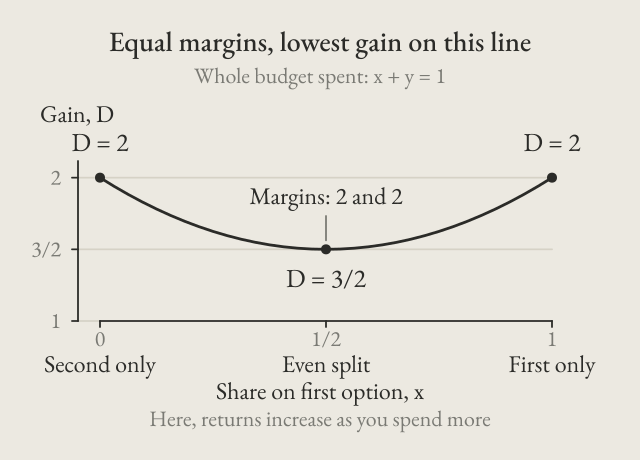
- Multiplier conditions that certify the best capped allocation, even at a cap, and an example of why they need diminishing returns.
What it does not claim
It makes no claim about any particular organism, brain or society.
Cite
Tsiokos, I. (2026). Six Birds Foundations V: Endogenous Closure. A Catalog of Structural Laws for Living, Cognitive, and Social Systems. Zenodo. https://doi.org/10.5281/zenodo.23187543